
Distracted Driving Accident Lawyer in Houston
 A driver who glances at a phone for a few seconds can drift across a lane or miss a red light before anyone has time to react. Texas makes it an offense to read, write, or send a text while driving unless the vehicle is stopped, and a driver whose distraction causes a crash can be held responsible for the injuries that follow. If you were hurt in that kind of collision, a distracted driving accident lawyer in Houston at The Buzbee Law Firm can explain how these rules apply to what happened. Call 800-992-5393 for a free consultation.
At The Buzbee Law Firm, we try and win big cases. We don’t advertise for work and then refer it to other attorneys, and we stay with you until the end. You can also contact us for a free consultation about your crash.
What Counts as Distracted Driving in Texas?
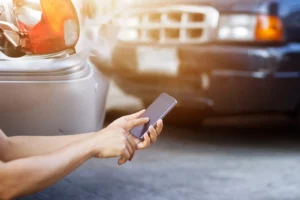 Distracted driving is any activity that takes a driver’s attention away from the road, from texting to eating or talking with passengers. The Texas Department of Transportation (TxDOT) reports that distracted driving caused 86,384 crashes on Texas roads in 2025, killing 299 people and seriously injuring more than 2,400.
Under Section 545.4251 of the Texas Transportation Code, a driver commits an offense by using a portable wireless communication device to read, write, or send an electronic message while operating a motor vehicle unless the vehicle is stopped. An electronic message is data read from or entered into a wireless device to communicate with another person.
Beyond the texting law, a distracted driving claim works like any Houston car accident claim, with the other driver’s attention as the central fact to prove.
How Does the Texas Texting Law Affect an Injury Claim?
If the driver who hit you was texting, you may wonder whether a ticket or criminal charge helps your case. The texting statute is a criminal traffic law. The offense is usually a misdemeanor punishable by a fine of $25 to $99, or $100 to $200 after a prior conviction under the same section. When the driver caused another person’s death or serious bodily injury, it becomes a Class A misdemeanor punishable by a fine of up to $4,000 and up to one year in jail. Those penalties punish the driver but do not pay you anything. Your injury claim is a separate matter that asks whether the driver’s distraction caused the crash and what harm it caused you.
The statute also lists affirmative defenses, which are facts that defeat a charge, such as using a hands-free device, navigating by GPS, or summoning emergency help.
So if the other driver says they were only following GPS directions or using a hands-free device, that does not end your claim. TxDOT notes that even voice-to-text use affects driving, and a driver can still be found negligent, meaning the driver failed to use reasonable care, when that lapse caused the crash.
How Is Distraction Proven After a Houston Crash?
When a driver does not admit to being distracted, the proof has to come from other evidence, which can include:
- Statements from witnesses who saw what the driver was doing before impact
- The police crash report and any citation issued at the scene
- Phone records showing activity at the time of the crash
- Video from nearby businesses, traffic cameras, or dashboard cameras
- Physical evidence at the scene, such as where and how the vehicles came to rest
We are courtroom lawyers, and we prepare every case as if it will be tried to a verdict in front of a jury. In a distracted driving case, that jury will want to know exactly what the other driver was doing in the seconds before the crash.
What If You Were Partly at Fault for the Crash?
Fault can be shared, and the other side can argue that you were also distracted or driving carelessly. Under Section 33.001 of the Texas Civil Practice and Remedies Code, a claimant cannot recover damages if his or her percentage of responsibility is greater than 50%. At 50% or less, the claimant can still recover, but Section 33.012 reduces the damages by the claimant’s own percentage.
For example, if a jury found $100,000 in damages and assigned you 20% of the responsibility, the recovery would drop by 20%, to $80,000. That is why proof of the other driver’s distraction matters to your share of the fault as well as to theirs.
What Compensation Can a Distracted Driving Claim Include?
Texas law groups damages into categories defined in Section 41.001 of the Civil Practice and Remedies Code:
- Economic damages: Compensation for actual financial losses, such as medical bills and lost earnings.
- Noneconomic damages: Compensation for losses such as physical pain and suffering, mental anguish, disfigurement, physical impairment, and loss of enjoyment of life.
- Exemplary damages: Damages awarded as a penalty rather than to pay for a loss, which Section 41.003 allows only when the claimant proves fraud, malice, or gross negligence by clear and convincing evidence, a higher standard of proof than most civil claims require.
Texas law defines gross negligence as conduct involving an extreme degree of risk that the person actually knew about but went ahead with anyway, with conscious indifference to the safety of others. Ordinary negligence does not meet that standard, and whether a particular driver’s phone use does depends on the facts of the crash.
How Long Do You Have to File a Distracted Driving Lawsuit?
Texas generally requires a personal injury lawsuit to be filed no later than two years after the day the cause of action accrues, under Section 16.003 of the Civil Practice and Remedies Code. For a crash injury, the clock generally starts on the day of the crash, because Texas treats a claim as accruing when the wrongful act causes an injury, and the statute lists exceptions that give some claims a different deadline. Video can be recorded over and memories fade, so the evidence of distraction can be at risk long before the filing deadline arrives.
Talk With a Distracted Driving Accident Lawyer in Houston
A crash caused by someone else’s distraction can leave you with medical bills, missed work, and the frustration of knowing it never had to happen. The Buzbee Law Firm has obtained more than $10 billion in verdicts and settlements for clients, a record we are proud of, and we fight just as hard in every case we take, starting with what the other driver was doing. Call 800-992-5393 or contact us today for a free consultation with a distracted driving accident lawyer in Houston.