
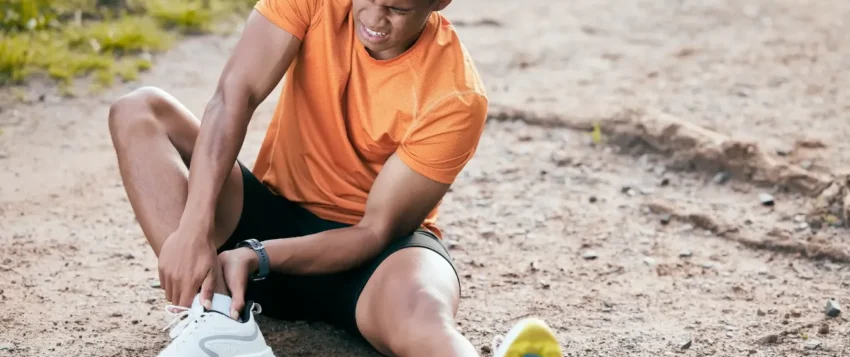
You can sue over a football injury when it was caused by someone’s negligence or misconduct rather than the ordinary risks of the game. A defective helmet, a coach who waved a dazed player back onto the field, a camp that ignored its own safety rules, or an opponent who did something reckless and outside the rules can each support a claim. What you generally cannot sue over is a clean, in-bounds hit that happened to hurt, because that kind of contact is part of the sport you agreed to play.
That distinction sounds simple, and in practice, it decides most cases. Here is how Texas draws the line, who can be held responsible, and how long you have to act.
The Line Between an Accepted Risk and a Real Claim
When you or your child steps onto a football field, you accept the dangers that come naturally with football. Getting tackled, blocked, or hurt during normal play is part of the bargain, and Texas will not let you sue over it. That does not hand everyone else a free pass. Coaches, schools, camps, trainers, and equipment makers still owe a duty of reasonable care, and when they fall short and someone gets hurt, ordinary negligence rules apply.
This holds up in practice: coaches, camps, and supervisors are generally held to ordinary negligence principles rather than a special heightened standard for sports settings. Your own share of the blame still counts. Under Texas Civil Practice and Remedies Code § 33.001, you can recover as long as you are not more than 50% at fault, with any award reduced by your percentage of responsibility.
When Football Injuries Often Become Claims
A handful of fact patterns show up again and again in cases worth pursuing:
- Defective equipment: A helmet, faceguard, or pad that fails to do its job can put liability on the maker or seller under Texas products liability law.
- Ignored concussion signs: Sending a player back in after a visible head injury, against medical guidance, can support a negligence claim.
- Negligent coaching or supervision: Pushing an athlete past safe limits, running dangerous drills, or leaving young players unsupervised.
- Unsafe conditions: Broken gear, hidden field hazards, or missing water and medical staff during the Texas heat.
- Reckless or intentional acts: A hit thrown well outside the rules, or a deliberate attempt to injure, sits outside anything a player agrees to.
Concussions, CTE, and Texas Return-to-Play Rules
Head injuries drive most of the serious litigation in this area, and Texas has built specific rules around them. Under a state law often called Natasha’s Law, a student who might have a concussion has to be pulled from practice or competition right away and cannot return until a treating physician clears them in writing. Those duties live in Texas Education Code § 38.156 and § 38.157.
The law cuts both ways. Texas Education Code § 38.159 does not waive any immunity a school district or its employees already have, and it also shields members of a concussion oversight team from liability tied to their service on that team.
And it reaches only school-sponsored interscholastic athletics (organized competition between schools, like a UIL football program), so many private youth and recreational leagues fall outside it. When repeated hits lead to a lasting brain injury or a diagnosis of CTE (chronic traumatic encephalopathy), the strength of a case often turns on who ignored a known danger and what records exist to prove it.
The School Immunity Problem
Here is where a lot of Texas families hit a wall. Public school districts are governmental units, and under the Texas Tort Claims Act, they are immune from most injury lawsuits. Texas Civil Practice and Remedies Code § 101.051 keeps that immunity in place for districts except in narrow situations, most of which involve the use of a motor vehicle, like a bus wreck on the way to a game.
That does not always end things. Private schools do not get the same protection. Coaches and staff can answer for their own conduct in certain situations. Equipment makers and outside camp operators are private defendants with no immunity at all. And when a public entity is involved, you may have to give formal written notice within a short window under Texas Civil Practice and Remedies Code § 101.101, often much sooner than the normal deadline.
Who Might Be Responsible
Depending on the facts, a claim might run against:
- The equipment manufacturer: For a helmet or pad that was defective or unreasonably dangerous.
- A private school, league, or camp: For negligent supervision, staffing, or safety practices.
- A coach or athletic trainer: For brushing past protocol or medical warnings.
- A medical provider: For clearing an athlete too soon or missing a serious injury.
- Another participant: For conduct so reckless or intentional that it left the bounds of the game.
How Long You Have to File
Most Texas injury claims carry a two-year deadline under Texas Civil Practice and Remedies Code § 16.003. Claims against government entities can demand notice far earlier than that. For an injured child, the clock is usually paused under Texas Civil Practice and Remedies Code § 16.001 until they turn 18, though waiting rarely does a case any favors, since evidence and memories fade.
What If Symptoms Showed Up Long After the Hit?
Brain injuries do not always announce themselves that day. When a condition could not reasonably have been discovered right away, the filing deadline can sometimes run from when it was found, which is worth reviewing with a personal injury lawyer quickly.
Talk to a Firm That Tries These Cases
Football injury claims get complicated fast, between immunity defenses, product liability disputes, medical proof, and defendants who lawyer up early. Our firm at The Buzbee Law Firm built its name by carrying hard cases into the courtroom instead of settling them short, and you can see the results in our record of verdicts and settlements.
You can also hear how we think about fights like these on our podcast, Swimming With the Sharks. To talk through what happened, contact us online for a free case review, or call 800-992-5393.
About The Author: Tony Buzbee
 Tony Buzbee earned his J.D. summa cum laude from the University of Houston Law Center after serving as a United States Marine Corps Recon officer. He is widely recognized as one of the nation’s leading trial lawyers and has received honors including Texas Lawyer Attorney of the Year and Lawdragon Leading Lawyer.
Known for taking on high-stakes litigation nationwide, Tony is respected for his leadership, courtroom advocacy, and commitment to achieving exceptional results for his clients and the community.
Client testimonials frequently praise Tony’s strategic approach, relentless advocacy, and ability to secure successful outcomes in complex cases.
Avvo / Justia / Linkedin / Facebook / Youtube / Instagram / Yelp /
Contact The Buzbee Law Firm Today
If you have a legal matter in Texas, we at The Buzbee Law Firm are here to help. Call us today at (713) 223-5393 or contact us online to schedule your free consultation. We proudly serve Houston and clients throughout the state of Texas.
Our Texas Personal Injury Law Firm
The Buzbee Law Firm – Houston Office
JPMorgan Chase Tower
Address: 600 Travis Street, Suite 7500, Houston, TX 77002
Phone: (713) 223-5393
Our firm is located near you. Find us with our GeoCoordinates: 29.7604284,-95.3640206